What a difference a decade makes. I've been photographing silver eagles since 2002, and there has been a clear and perceptible change in the quality of these coins. It's not a good change either, as I'm sure many of you collectors out there can attest.
Through the years various methods have been used to prepare proof coinage, from basic wood tools, to chemical etching, to lasers. The ultimate purpose of the proof remains the same: to produce a high-quality specimen of a coin for collectors. It's an expression of artistry and craftsmanship. Up until recently this has been a time consuming, costly process if a mint wanted to produce proof coinage on a large scale. Now the process has been altered in order to make proofs more quickly, and efficiently. However I think this efficiency has come at a steep cost in terms of overall quality of appearance.
Observe for yourself on these two American silver eagles. On the left we have a proof coin from 2002, the frosting on the devices prepared by the conventional grit blasting. The design is clearly defined and pronounced, and the frosting is bright and lustrous.
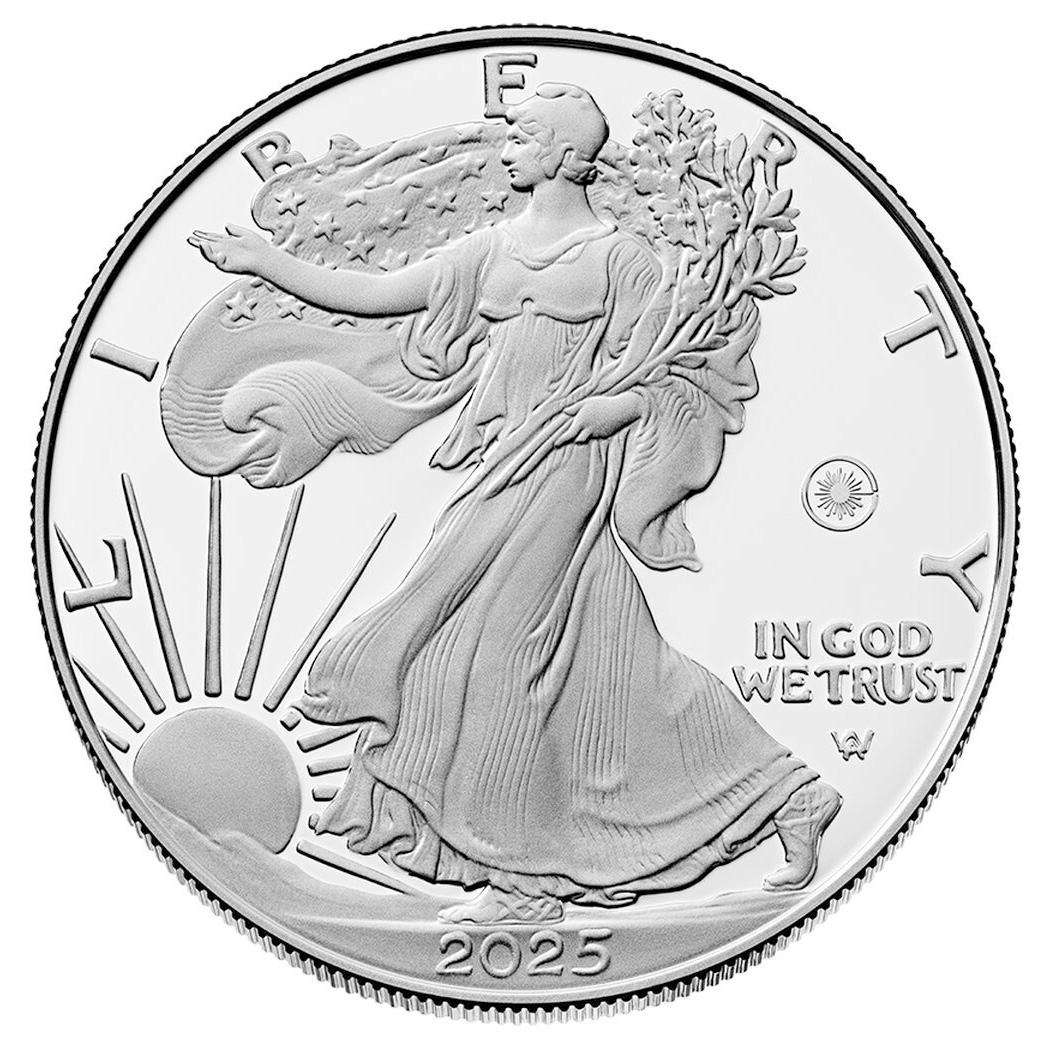
On the right is a 2012 silver eagle with laser frosting. There is less definition in the design, and it is flat and lusterless. Worst of all, Miss Liberty appears as though she has a terrible case of psoriasis. This is not an expression of craftsmanship, it just looks cheap.
Unfortunately this is becoming more common worldwide.
The US Mint seems to indicate that its laser technology is a proprietary one, so the fine details of it are difficult to pin down. However one can easily find literature on the laser technology used by foreign mints, mainly because the technology was supplied to them by a German-based company called FOBA.
FOBA's website lists the capabilities of its technology for the "Mint Industry". Not only is it responsible for the frosting on the coins, but it applies the use of lasers through much of the process of preparing the dies. FOMA also boasts the ability to include more security features on coins, such as laser engraving. The Royal Canadian Mint has, unsurprisingly, embraced this technology whole heartedly and placed these engravings on all new one and two dollar coins which includes a "tamper proof microscopic laser engraved virtual image" and "edge lettering, a microscopic mark and a reversible image into the coins as optical security features". The real news to me is the idea that the loonies and twoonies were so compromised that they even needed such security features to begin with. Will the general public even care about such security features on such a low denomination anyway?
A joint RCM and FOBA brochure I discovered online lists the benefits of this process. The most important point is "Significant savings when compared to the labor intensive process of frosting manually (traditional sandblasting)." I really can't fault the Royal Canadian Mint or any mint for wanting to reduce costs and save time. They are businesses after all. But the last point among the benefits is "Artistic texturing to elevate designs to new heights". I had to wince at that one. Maybe it's because this technology is still in its infancy, but I have yet to see anything produced by these lasers that elevates designs, let alone to takes them to new heights. Just the opposite in fact, just look at how reduced the relief of the 2012 silver eagle appears compared
We coin collectors are sticklers for quality. We demand the best. Sure, there's a big market for mass produced proof mint products, but I'm sure there must be room for a boutique market as well. I personally would be willing to pay more for a traditionally produced proof coin. Something hand-crafted, and not 100% reliant on computers and modern technology.
If we cannot clearly see designs on these new proof coins because the devices are so flat and pebbly, then are they not flawed? If they are not the best quality coins a mint can produce, then can they be called proofs?
These are more philosophical questions, rather than pure technical ones. But one thing's for sure; I'd rather Miss Liberty not look like she has lizard scales.
Sources
http://www.fobalaser.com/industry-solutions/mint-industry/
http://www.usmint.gov/downloads/about/annual_report/2003annualreport.pdf




 Copper & Nickel
 Silver Coins
 Gold Coins
 Commemoratives
 Others
 Bullion
 World
World
 Coin Market
 Auctions
 Coin Collecting
 PCGS News